Taiz: A political seminar discusses scenarios of the American-Iranian conflict and its implications on Yemen and the options for decision-makers
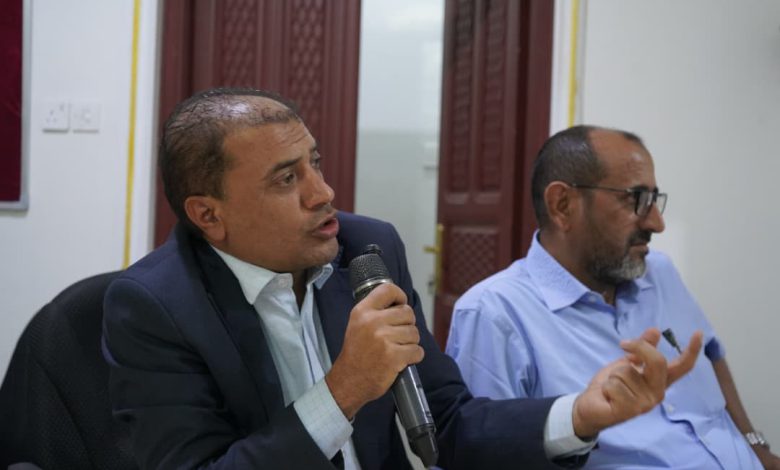
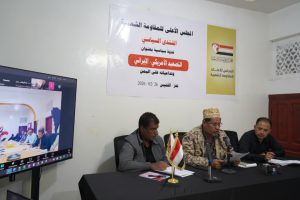
Taiz (Specific Source): The Supreme Council of Popular Resistance organized a comprehensive political seminar titled “The American-Iranian escalation and its implications on Yemen,” discussing the dimensions of the escalating tension between Washington and Tehran and its direct reflections on the Yemeni scene. The seminar was held through three research papers presented by a group of researchers, political and military analysts.
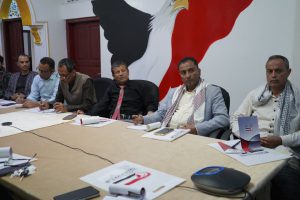
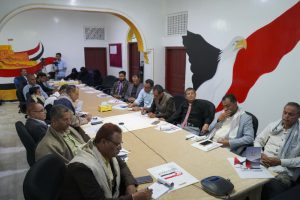
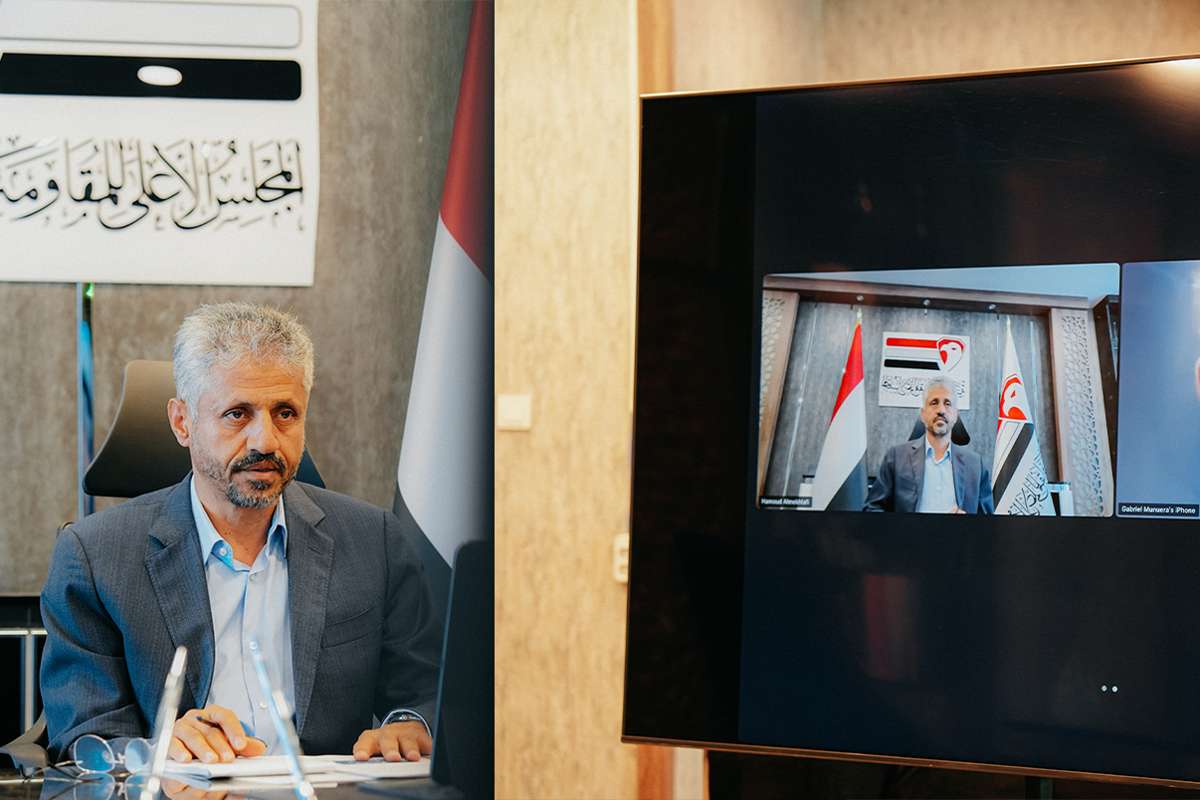
The seminar was attended by the head of the Supreme Council of Popular Resistance, Sheikh Hamoud Said Al-Makhlafi, alongside leaders in the council, military experts, academics, politicians, and researchers, some of whom participated via video link. They discussed the fundamental changes in the structure of the Yemeni conflict and its direct impact on the American-Iranian tension, providing strategic visions for the course of events.
The first paper, “The Behavior of the Houthi Militia in the American-Iranian Conflict Equation,” presented by Dr. Abdulwahab Al-Yemeni, examined the nature of the militia’s relationship with Iran. The paper showed that the militia uses ideology and anti-American rhetoric as a tool for popular mobilization and military reinforcement, while its major decisions are subject to the “pragmatism” imposed by Iran based on the needs of its complicated files, such as the nuclear file and its influence in the region, making the Houthi decision functionally integrated into the Iranian-American conflict system.
The second paper, “Patterns of Houthi Military Escalation and the Limits of Deterrence,” presented by Colonel Abdulbasit Al-Bahr, stated that the Bab al-Mandeb Strait and the Red Sea have become a direct international conflict zone, through which 10-15% of global trade passes. He noted that the Houthi militia follows a strategy of “economy of exhaustion,” using drones and low-cost missiles to force international coalitions to consume expensive interceptive missiles, creating an unbalanced cost equation that serves Iranian interests first and foremost.
The third paper, “The Impact of Regional Escalation on Yemen and the Options for Yemeni Decision-Makers,” presented by researcher Abdulsalam Qaid, warned of the erosion of national sovereign decision-making and the transformation of Yemen into a “bargaining chip” in international deals. He noted that the legitimate government should link global stability to the restoration of the state by emphasizing that the security of international navigation in the Red Sea will not be sustainably achieved except by ending the Houthi coup and restoring legitimate institutions.
The participants in the seminar emphasized that the current regional moment represents a historic opportunity for the Yemeni state to reorder its priorities, unify its national ranks, and invest in international transformations to serve the battle of restoring the state and ending the Houthi coup, and to block any regional arrangements that bypass the essence of the Yemeni issue.