*On the Path of Comprehensive Southern Dialogue: The Supreme Council of Popular Resistance in Aden and Lahj Holds a Consultative Meeting to Discuss Unifying Ranks and Confronting Challenges*

*On the Path of Comprehensive Southern Dialogue: The Supreme Council of Popular Resistance in Aden and Lahj Holds a Consultative Meeting to Discuss Unifying Ranks and Confronting Challenges*
_Lahj: Special_
A consultative meeting of the Popular Resistance Councils in Aden and Lahj condemned the escalation of assassinations in the interim capital. It called on security agencies to swiftly pursue those involved, bring them to justice, and put an end to the security breakdown threatening stability and public order.
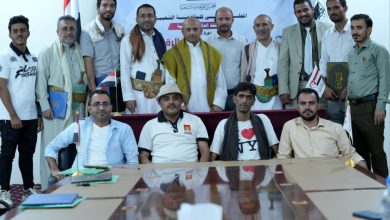
The two councils held a consultative meeting this morning, Monday, in Lahj Governorate. The meeting was attended by Sheikh Abdulraqeeb Al-Subaihi, Deputy Head of the Supreme Council of Popular Resistance and Head of the Resistance Council in Aden Region, along with representatives from the Council’s General Secretariat, leaders of the Resistance Councils in Aden and Lahj, and a large gathering of citizens.
The statement issued by the meeting affirmed that the continuation of assassinations, most recently the killing of Wissam Qaed, Acting Executive Director of the Social Fund for Development, and before that the educator Abdulrahman Al-Sha’er, signals a return to the targeting of cadres and elites. This demands a firm stance from the relevant authorities.
Attendees praised security efforts that led to the arrest of suspects in Al-Sha’er’s assassination, calling for investigations to be completed and for the parties behind these operations to be exposed, whether in financing, planning, or execution.
In this context, the meeting stressed the importance of proceeding with the comprehensive Southern-Southern dialogue under the sponsorship of the Kingdom of Saudi Arabia, as a necessary step to unify ranks and overcome disputes. It affirmed the readiness of both Resistance Councils to actively participate in this process.
Participants also renewed their support for presidential decisions and for efforts aimed at unifying the military and security institutions, integrating all formations under the state’s framework to strengthen the rule of law and end division.
The statement emphasized that Aden and Lahj belong to all their people, rejecting any attempts at exclusion or monopolization of representation, and stressing the need for a national partnership based on pluralism and diversity. The meeting also rejected any calls for chaos or disruption of security, warning of their danger to the stability of liberated governorates, and noting that such calls only serve projects of fragmentation and sabotage.
Attendees reaffirmed that the Houthi militia remains the primary enemy of Yemenis, and that ending its coup and restoring state institutions remains the unifying national goal.
The statement further called for the immediate release of all abductees, the rejection of hate speech, and the adoption of dialogue to resolve disputes. It held the government responsible for the deterioration of services and living conditions, demanding the return of all officials to the country to perform their duties. It also stressed continued support for all efforts aimed at unifying the national stance, consolidating security and stability, serving citizens, and completing the battle to restore the state.
During the consultative meeting, speeches were delivered by Sheikh Abdulraqeeb Al-Subaihi, Head of the Popular Resistance Council in Aden Region, as well as by representatives of the Popular Resistance Councils in Lahj and Aden. All speeches focused on the security situation and the political dimension of the current stage, pushing to formulate a more cohesive national position. Speakers stressed the need for the Presidential Leadership Council and the government to shoulder their responsibilities in managing this phase and to take serious action toward restoring the state.
They affirmed that continued complacency worsens crises and prolongs suffering, noting the need to restore the vital role of the interim capital as a political and economic hub that reflects its national status and strengthens the presence of state institutions.
On another note, the speeches affirmed commitment to national partnership and rejected any monopolization of representation by a single party. They stressed that diversity within the southern governorates is a source of strength, not conflict. They also emphasized the importance of improving services and living conditions amid ongoing deterioration, and the need to shift to practical action and tangible achievements that directly impact citizens’ lives and enhance trust between citizens and state institutions.